
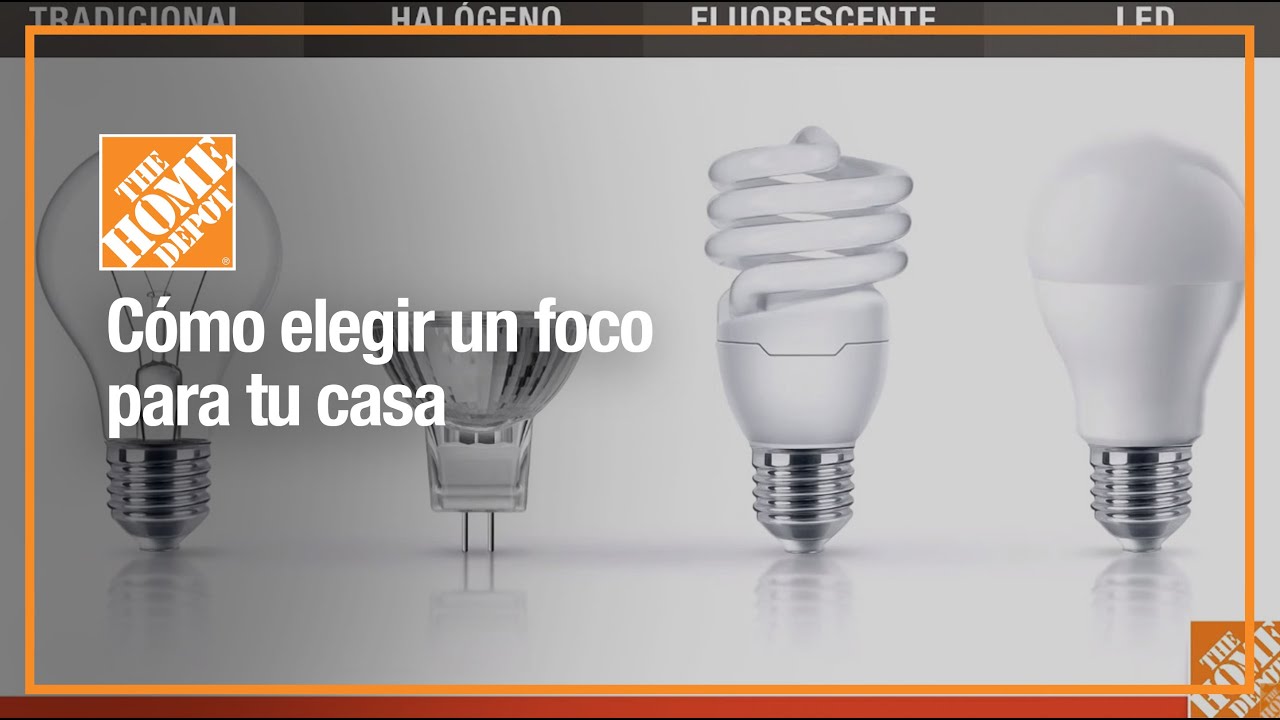
¿Cuáles son los mejores focos para casa? Por ambiente y uso
Los datos están comprobados en noviembre de 2026. La mejor elección cambia según dónde se instala y qué funciones usarás; por eso conviene decidir primero el ambiente y después revisar potencia, haz, temperatura de color, IRC y regulación.
La elección rápida según ambiente, presupuesto y uso
Para la mayoría de las viviendas, conviene un foco LED regulable en tono y luminancia entre 2700 y 4000 K. Si vas a sustituir bombillas existentes sin rehacer la instalación, elige primero el portalámparas: GU10, E27, MR16 o GX53. Un aro empotrado con bombilla GU10 y haz estrecho resulta más controlable en las lectoras where the light must reach the working plane. Para un baño, un downlight LED con IP44 o superior evita la exposición directa al agua. Para exterior, la prioridad es un foco con IP65 o IP67, materiales resistentes y una potencia adecuada al área que ilumina.
La compra inteligente es sencilla: reserva el formato GU10 para focos empotrables y orientables, y el formato E27 para lámparas de mesa, flexo y Portalámparas estándar. Si vas justo de presupuesto, un modelo de 7 W con 806 lúmenes puede servir paraLighting replace; no compres regulación complicated if you only need general light.
La opción más versatile para la mayoría
Un foco LED regulable en tono y luminancia cubre iluminación general, trabajo y relaxation porque permite cambiar la escena sin cambiar de luminaria. Para lectura, busca 4000 K y un IRC de Ra90 o más; para<CENA>, 2700 K. La regulación por dimer debe ser compatible con el interruptor: si es de corte de fase, comprueba que el foco lo indique expresamente. Un sistema DALI ofrece más control, pero exige un driver y una programación compatibles.
Si buscas la máxima calidad por ambiente
La diferencia entre versiones útiles se mide con datos: IRC Ra90 o Ra95 para colores y piel, 2700 K para=CENA, 3000 K para=CENA and relaxation, 4000 K para trabajo y 6500 K para espacios muy técnicos. El ángulo de haz de 24 a 36 grados concentra la luz y mejora la iluminação of a desk; uno de 60 grados ilumina más area and reduce the sensation of a spotlight.
Si vas justo de presupuesto
Compara los datos before the price: potencia, lumen output, useful life, warranty and socket compatibility. Un foco de 7 W that delivers 806 lumens and states a useful life of 25,000 hours can be a sensible replacement for a 60 W incandescent lamp, but check the beam angle and the dimmer. A lamp with a 15,000-hour rating is cheaper, though its useful life is shorter and its warranty may also be shorter. Regulation, color control and smart functions should be purchased only when you will use them.
Cómo elegir un foco: criterios que cambian la decisión
La ficha técnica debe let you compare products without guessing. Start with the socket type and physical dimensions, since an E27 lamp does not fit a GU10 holder. Then review power in watts, light output in lumens, beam angle in degrees, color temperature in kelvin, IRC, dimming method, IP protection, rated life in hours and warranty. These specifications should be read together: 9 W and 800 lumens are not equivalent to 9 W and 1,200 lumens, and a narrow beam is not automatically better for a large room.
Flujo luminoso, potencia y haz
- For a ceiling lamp, compare total lumens, not only watts: 800 lumens is a reasonable starting point for a bedside or hallway, while 1,500 lumens distributed across a room is more useful than a single 1,500-lumen spotlight with a narrow beam.
- For a desk, aim for 800 to 1,200 lumens on the working area, with a beam of about 36 to 60 degrees. A 24-degree beam can create a bright spot and leave the rest of the desk darker.
- For a table or reading lamp, 500 to 800 lumens with a narrower beam is often enough. For an embedded downlight, a 60-degree angle spreads light more evenly.
The manufacturer’s lumen figure is the most useful comparison, but check whether it refers to the complete lamp or only the LED source. Also verify the cut-off dimensions of the recessed housing; power alone does not tell you whether the fixture will fit.
Temperatura de color y regulación
- 2700 K produces a warm white suitable for bedrooms and evening meals.
- 3000 K is a compromise for living rooms, corridors and restaurants.
- 4000 K is more appropriate for kitchens, offices and study areas.
- 6500 K is cool and high in perceived contrast; it is useful for technical or industrial spaces but is less comfortable for prolonged relaxation.
Dimming changes light output; CCT changes the white tone. A bulb with both features needs compatible controls. With phase-cut dimmers, use a lamp explicitly marked as dimmable; with DALI, use the specified driver and system. Check whether the minimum dimming level is specified and whether the lamp flickers at low output.
Tabla comparativa: focos y versionesRecommended
| tipo de foco | bombilla o fuente | potencia | flujo luminoso | haz | temperatura de color | regulación | IRC | protección IP | vida útil | garantía | precio orientativo con moneda y fecha |
|---|---|---|---|---|---|---|---|---|---|---|---|
| Foco LED estándar | E27 | 9 W | 806 lúmenes | 180° | 2700 K | sin dato | Ra80 | IP20 | 15.000 h | sin dato | 4-8 USD (~7 € · ~149 MXN · ~25.580 COP · ~12.360 ARS) (noviembre de 2026) |
| Foco LED regulable | E27 | 9 W | 806 lúmenes | 180° | 2700 K | regulable | Ra80 | IP20 | 25.000 h | sin dato | 8-15 USD (~13 € · ~279 MXN · ~47.960 COP · ~23.170 ARS) (noviembre de 2026) |
| Downlight empotrado | GU10 | 7 W | 600 lúmenes | 36° | 4000 K | sin dato | Ra90 | IP44 | 25.000 h | sin dato | 6-12 USD (~11 € · ~223 MXN · ~38.370 COP · ~18.540 ARS) (noviembre de 2026) |
| Foco de riel | GU10 | 8 W | 700 lúmenes | 24° | 3000 K | regulable | Ra90 | IP20 | 25.000 h | sin dato | 10-20 USD (~18 € · ~372 MXN · ~63.950 COP · ~30.890 ARS) (noviembre de 2026) |
| Barra para encimera | LED integrado | 12 W | 1.200 lúmenes | línea | 4000 K | regulable | Ra90 | IP20 | 30.000 h | sin dato | 15-30 USD (~27 € · ~558 MXN · ~95.920 COP · ~46.340 ARS) (noviembre de 2026) |
| Aplique de baño | LED integrado | 8 W | 600 lúmenes | 110° | 3000 K | sin dato | Ra90 | IP44 | 25.000 h | sin dato | 12-25 USD (~22 € · ~465 MXN · ~79.930 COP · ~38.620 ARS) (noviembre de 2026) |
| Proyector exterior | LED integrado | 20 W | 1.600 lúmenes | 30° | 3000 K | sin dato | Ra80 | IP65 | 25.000 h | sin dato | 25-45 USD (~40 € · ~838 MXN · ~143.880 COP · ~69.510 ARS) (noviembre de 2026) |
Los precios son rangos orientativos de noviembre de 2026,Variables por país and oferta; no son una tarifa universal.
Focos para iluminación general desalón y comedor
Un plafón o downlight LED con buena distribución ofrece una base comfortable without turning every lamp into a visual obstacle. Los proyectores se reservan para bases or work areas: a dining table with a focal point, a sideboard or a painting. For general lighting, prioritize even distribution, aIRC of Ra90 and, if needed, dimming.
Downlights y plafones LED
An aro empotrado is useful when you want a clean ceiling and can cut or adapt the ceiling properly. A plafón circular is easier to install directly to the ceiling and works in hallways and bedrooms. A plafón rectangular can illuminate a dining table or rectangular zone more evenly. Beam angle is decisive: a 24-degree downlight concentrates light below, a 36-degree option still creates emphasis, and a 60-degree version spreads illumination across a larger area. Check the cut-off diameter and the depth of the housing before buying.
Focos de riel y proyectores
Focos de riel are mobile: you can move them toward a wall, artwork or table without electrical work. This is useful for rented homes or changing layouts, although the track may remain visible and several heads can create multiple shadows. Recessed downlights are visually cleaner and distribute light more evenly when planned correctly, but their position is fixed. For a living room that will be rearranged often, riel; for a finished ceiling, recessed or surface-mounted luminaires.
Focos para cocina, escritorio y trabajo
On preparation surfaces, the focus should prioritize IRC, low flicker and a controlled beam; these requirements are independent of decoration. A high IRC makes ingredients and skin look more accurate, while low flicker helps when the light remains in your field of vision for hours.
Luz de tarea en encimera y cocina
- A LED bar under the wall cabinet can illuminate the counter continuously. Compare its length, lumens, beam and color temperature; a 1,200-lumen bar is more useful for a work area than a high-lumen point source mounted far away.
- Downlights offer a clean look, but place them to reduce shadows from cabinets. A 36-degree beam and a 4000 K tone are a sensible starting point for task areas.
- An under-cabinet strip can hide the source and remove glare, but check the diffuser and IRC. A visible, narrow beam can create bright edges and dark spots.
Focos de escritorio y estudio
For prolonged work, 4000 K is a better starting point than 2700 K because the cooler white improves perceived alertness. Choose a lamp with at least Ra90 and regulated output if you will work at different times of day. A desk lamp should place the light close to the task without shining directly into the screen. Avoid extreme CCT switching during reading: it can disturb the eye’s adaptation. If the same desk also serves for reading at night, use a tunable lamp or two fixed scenes: 4000 K for work and 2700 K for evening.
Focos para dormitorio, baño e iluminación ambiental
In bedrooms and bathrooms, comfort and moisture protection weigh more than maximum lumens; the LED strip and CCT options allow scenes. In the bedroom, a warm source at low output is usually more comfortable than maximum brightness. In the bathroom, first check the declared IP rating and the manufacturer’s installation instructions.
Luz relajada y de noche
For bedside and ambient lighting, choose a dimmable warm-white focus: 2700 K and a low minimum dimming level are more relevant than RGB. A hidden LED strip can wash a wall or headboard and avoid a bright point in the direct line of sight. A bedside focus with a narrow beam is useful for reading, but its housing should be shielded to reduce glare. If the room is used for relaxation and work, select one fixture with CCT control rather than several unrelated lamps.
Focos y apliques para baño
IP44 is a reference for protected indoor areas subject to splashes; IP65 and IP67 are intended for stronger water exposure. The exact permitted installation depends on the product’s official instructions, not on the label alone. A ceiling downlight is convenient for general light; a wall light is useful around a mirror or bathtub. Check whether the lamp is allowed near the shower zone, whether the diffuser is replaceable and whether the fitting has a protective cover.
Tiras LED para iluminación indirecta
24 V strips are convenient for longer runs and can be cut at marked points, but the power supply and correct voltage are essential. IP20 suits dry indoor areas; IP54 offers a higher level of protection against splashes, subject to the manufacturer’s instructions. RGB provides colored light; RGBW adds a dedicated white LED, which can be useful for neutral or warm-white scenes. Check CRI, strip density, power consumption and whether the strip uses replaceable modules. Controllers should match the strip type, and proprietary apps can reduce compatibility with other systems.
Focos para exterior, terraza y jardín
In outdoor areas, protection against water, UV, temperature and maintenance matters more than adding RGB or app control. Check the IP rating, housing material, operating-temperature range and whether the light source can be replaced. Mounting and cable routing also determine whether a fixture is suitable for a terrace, path or garden.
IP65 e IP67: qué significan
| clasificación | exposición a agua | exposición a polvo | uso orientativo |
|---|---|---|---|
| IP20 | sin protección contra agua | sin protección específica | interior seco |
| IP44 | salpicaduras | protección parcial | baño protegido, zonas cubiertas |
| IP54 | salpicaduras | protección parcial | exterior cubierto, zonas con humedad |
| IP65 | chorro de agua | protección elevada | terraza, jardín y zonas expuestas |
| IP67 | inmersión temporal | protección elevada | zonas con exposición intensa o sumergencia puntual |
These classifications describe degrees of protection, not a universal installation approval. For a exposed exterior installation, verify the manufacturer’s instructions, fixing method and cable specification.
Focos de pared,garden projectors yPortable lamps
Wall lights provide broad, low-glare illumination when mounted beside a door or on a terrace wall. Garden projectors are decorative and can wash a surface with color, but their light output and weather protection should not be confused with task lighting. Portable rechargeable fixtures are useful for paths and temporary events; autonomy depends on the battery capacity, brightness and mode. Check the stated runtime at the intended level, charging connector and IP rating. Their drawback is battery aging and the need to recharge them.
Opciones inteligentes y de color
Zigbee, Wi-Fi, Bluetooth Mesh, DALI, RGB, RGBW and CCT solve different problems. Smart control is worthwhile when you want scenes, schedules or voice control across several fixtures. For a single lamp with manual switching, a conventional dimmable model is simpler and avoids an extra hub. DALI is aimed at planned professional or high-control installations; Zigbee and Bluetooth Mesh are useful for low-power connected devices, while Wi-Fi is convenient when each device has its own connection.
Cuando conviene la iluminación inteligente
Scenes allow you to set brightness and CCT for different activities. Schedules can turn lights on in the morning and lower them at night, while app, wall control or voice assistant changes them. Choose a system based on the number of devices and the existing gateway: a standalone Wi-Fi bulb is simple, whereas multiple Zigbee lights usually work more coherently through a coordinator. Check whether the manufacturer requires an account, whether the installation works without internet and whether updates alter functions. The real drawback is configuration: mixed ecosystems can require separate apps or bridges.
RGB, RGBW y CCT: diferencias útiles
| sistema | colores | blanco | consumo | compatibilidad |
|---|---|---|---|---|
| RGB | rojo, verde y azul | no tiene LED blanco dedicado | normalmente mayor que una versión comparable solo blanca | requiere controlador RGB |
| RGBW | rojo, verde, azul y blanco | blanco adicional | depende del modo y de la Duty cycle | requiere controlador RGBW |
| CCT | blanco con temperatura ajustable | de 2700 K a 4000 K o 6500 K según modelo | menor que mixing RGB para luz blanca | requiere dimmer compatible con CCT |
RGB is for colored ambience, not for a neutral task light. RGBW is more versatile, but the white channel may not match every CCT value. CCT is the practical choice for kitchens and studies when you mainly need different white tones. Before buying a smart lamp, confirm the socket, wattage, voltage, app ecosystem, remote protocol and whether dimming and CCT are separate controls.
Preguntas frecuentes sobre la elección de focos
¿Cuántos lúmenes necesita una lámpara de escritorio?
Como punto de partida, busca entre 800 y 1.200 lúmenes dirigidos a la superficie de trabajo. El resultado depende del tamaño del escritorio, la distancia, el haz y la presencia de otras fuentes.
¿Qué IRC conviene para la cocina?
Elige Ra90 o más si vas a preparar alimentos o cuidar la piel. El IRC indica la reproducción del color, pero no sustituye a una buena distribución de la luz.
¿IP65 sirve para un baño?
Puede servir en zonas expuestas si el fabricante lo autoriza expresamente. La etiqueta IP no sustituye las instrucciones de instalación ni la separación respecto a la ducha.
¿Regulación por interruptor o por aplicación?
El interruptor es más simple y suele funcionar sin red. Una aplicación ofrece escenas y horarios, pero añade configuración, dependencia del fabricante y, en muchos casos, un puente o concentrador.
Fuentes
- VaxlampLas 5 mejores luces de techo para dormitorios en 2026 (guía experta)consultado el 03/11/2026
- LedsoneTendencias de iluminación LED para 2026consultado el 03/11/2026
- CasadecorLas luminarias y sistemas de iluminación en Casa Decor 2026consultado el 03/11/2026