
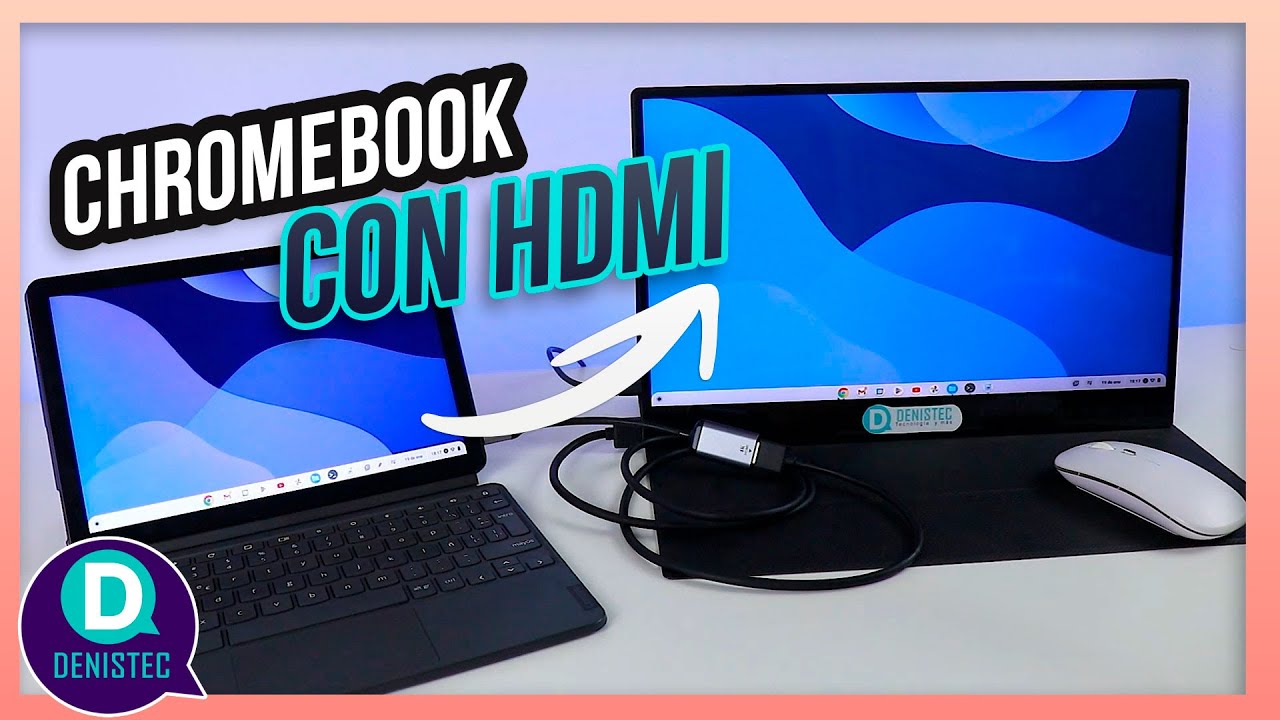
Chromebook con HDMI: los mejores para conectar y reproducir
La elección rápida
Si quieres comprar sin complicarte, elige el ASUS Chromebook CM14: incorpora un puerto HDMI integrado, procesador MediaTek Kompanio 540 y hasta 13 horas de batería. Es la opción más equilibrada para uso académico,_oficina y navegación, siempre que 128 GB de almacenamiento y una pantalla Full HD te basten.
Si dispones de un presupuesto amplio y quieres una pantalla grande, el Lenovo Chromebook Plus i de 15 pulgadas ofrece un panel IPS 2K, Intel Core i3, 8 GB de RAM, teclado numérico, lector de huella y hasta 11 horas de batería. Su disadvantage is that price and weight rise compared with the CM14.
El Acer Chromebook 315 también tiene HDMI y hasta 13 horas de autonomía, pero antes de comprar debes comprobar la configuración concreta de RAM, almacenamiento, pantalla y peso.
Los HP Chromebook Plus 14 y HP Chromebook 14 Interest To Those Who Want A Touchscreen And Need To Connect A Monitor. El Plus 14 tiene pantalla 2K 16:10; el Chromebook 14 usa una relación 6:10 y menor autonomy.
Los datos están comprobados en octubre de 2026.
Cómo elegir un Chromebook con HDMI
Prioriza un HDMI integrado si vas a conectar un monitor o televisor con regularidad. Evita pagar por un adaptador USB-C si la notebook ya incluye HDMI. Comprueba además si el puerto admite audio y vídeo, no solo una señal de imagen.
Un USB-C compatible con DisplayPort Alt Mode puede outputting vídeo mediante un adaptador, pero necesita un cable o adaptador compatible. USB-C por sí solo no garantiza esa función.
El procesador debe ser adequate for the real workload: MediaTek Kompanio 540 funciona well for browsing, documents and video calls; Intel Core i3 da más margen en tareas heavier. En los modelos comparados, la RAM llega hasta 8 GB y el almacenamiento a 128 o 256 GB.
Para una pantalla externa, verifica la resolución máxima, el refresh rate compatible and whether the Chromebook can extend the desktop instead of only duplicating it. For studies, touch and keyboard comfort can weigh more than gaming.
Also check the weight, audio support and battery: the models reviewed offer from 41 Wh to 65 Wh and declared battery figures range from 5 to 13 hours, depending on model and usage.
Tabla comparativa de los modelos
| Modelo | Puerto HDMI integrado | Puertos USB-C | Procesador | RAM | Almacenamiento | Pantalla | Batería | Peso | Tipo de uso |
|---|---|---|---|---|---|---|---|---|---|
| ASUS Chromebook CM14 | Sí | 2 | MediaTek Kompanio 540 | Hasta 8 GB | 128 GB | FHD 16:9 | Hasta 13 horas | Sin dato | Estudio y oficina |
| ASUS Chromebook CM15 | Sí | 2 | MediaTek Kompanio 540 | Hasta 8 GB | 128 GB | FHD 16:9 | Sin dato | Sin dato | Estudio y oficina |
| Lenovo Chromebook Plus i de 15” | Sin dato | Sin dato | Intel Core i3 | 8 GB | 128 o 256 GB | IPS 2K | 65 Wh; hasta 11 horas | Sin dato | Productividad y monitor |
| Acer Chromebook 315 | Sí | Sin dato | MediaTek Kompanio 540 | Sin dato | Sin dato | Sin dato | Hasta 13 horas | Sin dato | Uso básico y estudio |
| HP Chromebook Plus 14 | Sin dato | Sin dato | Intel | 8 GB | Sin dato | 14” táctil 2K 16:10 | 41 Wh | Sin dato | Táctil y trabajo con monitor |
| HP Chromebook 14 | Sin dato | Sin dato | Intel | Sin dato | Sin dato | 14” táctil 6:10 | Sin dato | Sin dato | Táctil y uso general |
Las celdas «sin dato» no permiten asumir que un puerto o una cifra no exista; indican que la ficha aportada no permite confirmarlo. Antes de comprar, revisa la página oficial de cada configuración concreta.
ASUS Chromebook CM14 y CM15
El ASUS Chromebook CM14 es la compra más racional para quien necesita un puerto HDMI sin Oviedo a pagar por el Plus de Lenovo. Reúne MediaTek Kompanio 540, hasta 8 GB de RAM, 128 GB de almacenamiento, pantalla Full HD 16:9, HDMI, 2 puertos USB-C y batería declarada de hasta 13 horas.
El CM15 conserva el mismo tipo de processor, memoria máxima y almacenamiento indicado, además de HDMI y 2 puertos USB-C. La diferencia principal es el tamaño: el CM15 ocupa más espacio y resulta más cómodo como equipo de transported fixed. El material no aporta su batería, peso ni precio verificables.
Para estudiar, escribir, usar videollamadas y conectar un monitor, el CM14 cubre las necesidades habituales con menos inversión. Para trabajar con documents open simultaneously and use a larger screen, CM15 offers more physical space, but no data on the weight confirms whether that advantage compensates for portability.
No conviene elegirlos si necesitas GPU for games, editing demanding video or more than 128 GB de almacenamiento. Para gaming or content creation, verify the graphics and available storage before purchase.
Lenovo Chromebook Plus i de 15”
El Lenovo Chromebook Plus i de 15” compensa su mayor inversión when the external monitor is central to the job. Its Intel Core i3 processor and 8 GB of RAM give it more margin for multitasking than the baseline configurations of the ASUS models.
Its IPS 2K screen is the clear advantage for writing, spreadsheets and image review. The keyboard numérico helps with data entry, while the fingerprint reader adds a convenient way to unlock the device. The camera of 5 megapíxeles is useful for video calls where image quality matters.
The 65 Wh battery and up to 11 hours of declared autonomy make it suitable for a full working day, although actual duration depends on brightness, workload and wireless connectivity.
Storage options of 128 or 256 GB allow you to distinguish between the cheaper and more capable configuration. Before buying, verify the included HDMI and USB-C ports, since that data is not provided here. It also falls short of the CM14 for anyone who needs integrated HDMI explicitly or prioritizes the lowest price.
Acer Chromebook 315
El Acer Chromebook 315 is a straightforward option for writing, browsing, classes and video calls. It integrates HDMI, offers DTS audio and a MediaTek Kompanio 540 processor based on Arm. The declared battery life of up to 13 hours makes it useful for students who spend long periods away from a su 座.
The advantage is straightforward: you can connect a display without an extra video adapter, while the Arm-based processor is sufficient for ChromeOS office tasks. DTS audio adds value if you regularly watch content or use the built-in speakers.
However, “Chromebook 315” covers several configurations. Before paying, confirm the RAM, storage, screen resolution and size, number and type of USB-C ports, exact HDMI version, weight and battery capacity. The material provides no values for those fields, and they can materially affect performance and price.
It also does not fit those who need gaming, a discrete GPU, intensive video editing or a workstation-class keyboard. For those tasks, the Intel Core i3 Lenovo is better documented in the material and offers a 2K panel.
HP Chromebook Plus 14 y HP Chromebook 14
The HP Chromebook Plus 14 is the better of these two for visual work and touch. It has a 14-inch 2K 16:10 touchscreen, Intel processor, 8 GB of RAM and a 41 Wh battery. Its larger battery figure than the HP Chromebook 14's declared runtime makes it more suitable for a full day of classes, although the Plus 14 does not match the Acer 315 or ASUS CM14's up to 13-hour claim.
The HP Chromebook 14 also has a 14-inch touchscreen, but the material specifies a 6:10 aspect ratio and does not provide its RAM, storage, HDMI, USB-C, weight or battery figures. That makes it harder to recommend without checking the exact model number.
Neither should be selected purely because they have touch: a touchscreen is useful for drawing, scrolling and converting a laptop into a tablet, while for a permanently connected monitor the resolution, port layout and processor matter more.
Verify that the USB-C port supports DisplayPort Alt Mode if you plan to use an adapter, and confirm whether HDMI is integrated or absent. The HP Plus 14's 2K panel is the most useful feature here; the missing port data prevents a more precise comparison.
Conectar, reproducir y evitar fallos
- Elige la conexión correcta. For a monitor or TV with HDMI, use the Chromebook's integrated HDMI port. If the display has DisplayPort, use a USB-C-to-DisplayPort adapter only when the USB-C port supports DisplayPort Alt Mode. For VGA or DVI, use the corresponding adapter. Confirm the adapter's direction: some adapters support only one source-to-display direction.
- Conecta antes de configurar. Connect the power supply for the Chromebook, plug the cable into the external display and then select the correct input on the monitor or television. If there is no image, test the display's own HDMI port with another device before changing the Chromebook.
- Elige extender o extender. In ChromeOS, open the display settings and select the arrangement. “Duplicate” shows the same desktop on both screens. “Extend” creates a second workspace; move windows to it and drag them between displays. Touch gestures and cursor movement vary depending on the Chromebook and adapter.
- Resuelve el audio. If the picture appears but sound does not, click the ChromeOS volume icon, choose the display in the output selector and raise the volume. HDMI can carry audio, but the display, adapter, cable and input must all support it. If the external speakers use USB, connect them directly instead of expecting the HDMI connection to carry their sound.
- Ajusta la resolution. Select the native resolution of the monitor in ChromeOS to avoid text blur. If the image is cropped or unstable, try another cable, another display input or a different adapter. For higher resolutions or refresh rates, verify the adapter and cable specifications, because the Chromebook's USB-C capabilities vary by model.
- Diagnostica por partes. First test the Chromebook with its internal display, then test the external display with another computer, then swap the cable. Reconnect the adapter rather than leaving it inserted when changing displays. If only one application fails, test another application and review its own display settings.
Para evitar la compra incorrecta, la prioridad práctica es HDMI nativo, una salida USB-C con DisplayPort Alt Mode y el panel que necesitas; la autonomía declarada sirve como referencia, no como garantía en uso continuo.
Preguntas frecuentes sobre Chromebooks con HDMI
1. ¿Cuál es el mejor Chromebook con puerto HDMI?
Si buscas el mejor Chromebook con HDMI, prioriza un modelo con USB-C que admita video DisplayPort Alt Mode y un adaptador o cable USB-C a HDMI. La pantalla debe tener la resolución y frecuencia de刷新 que necesita el dispositivo; por ejemplo, 4K a 60 Hz requiere que tanto el puerto como el adaptador y el monitor lo permitan.
2. ¿Qué Chromebook con pantalla táctil y puerto HDMI conviene?
Un Chromebook táctil con HDMI debe tener una pantalla de 13 o 15,6 pulgadas y un procesador de la serie Intel Core i o equivalente. Para conectar un monitor externo, comprueba que el USB-C admita DisplayPort Alt Mode; muchos equipos usan un adaptador USB-C a HDMI en lugar de un puerto HDMI completo.
3. ¿Cómo conecto un Chromebook a un televisor mediante HDMI?
Conecta un extremo del cable HDMI al puerto HDMI del televisor y el otro al adaptador USB-C a HDMI del Chromebook, si no tiene HDMI directo. En el televisor, selecciona la fuente de entrada correspondiente y ajusta la resolución desde Configuración de Chromium; para 4K a 60 Hz, todos los componentes deben admitirlo.
4. ¿Puedo usar un Chromebook como monitor con HDMI?
Un Chromebook no funciona como monitor independiente mediante HDMI porque su puerto está orientado a enviar la imagen. Para aprovechar una pantalla externa, conecta el monitor al USB-C del Chromebook mediante un adaptador compatible con DisplayPort Alt Mode y configura la salida de pantalla desde el menú de Chromium.
5. ¿Qué adaptador USB-C a HDMI necesito para un Chromebook?
Necesitas un adaptador compatible con DisplayPort Alt Mode, no solo uno USB-C que cargue el equipo. Comprueba que la versión negotiate la resolución y frecuencia que quieras, como 4K a 60 Hz, y que el cable HDMI sea compatible con esa señal; algunos adaptadores limita la salida a 30 Hz.
6. ¿Cómo conecto un Chromebook a un monitor sin usar HDMI?
Puedes conectarlo con USB-C si admite DisplayPort Alt Mode,DisplayPort o Thunderbolt, usando el adaptador o cable adecuado. También es posible usar una base con puertos de video, pero debe ser compatible con la salida del Chromebook y ofrecer una entrada para el monitor; la configuración se realiza en el panel de pantalla de Chromium.
7. ¿Cómo conecto una PS5 a un Chromebook mediante HDMI?
La PS5 no envía una señal de consola directamente a un Chromebook para usarla como monitor. Para jugar, la opción compatible es transmitir la imagen de la consola a una aplicación o servicio compatible en el Chromebook, o conectarla a un monitor o televisor y usar el acceso remoto del juego si está disponible.
8. ¿Qué hago si la conexión HDMI del Chromebook al televisor no funciona?
Prueba otro puerto HDMI del televisor, selecciona la fuente correcta y reinicia el Chromebook y la televisión. Comprueba que el adaptador USB-C admita DisplayPort Alt Mode y que el cable no esté dañado; si aparece una imagen negra, reduce la resolución o desactiva la salida mejorada para diagnosticar el problema.
Fuentes
- TechiesupremeGoogle's 2026 Chromebook lineup includes built in AI featuresconsultado el 31/10/2026
- WrdsbConnecting a Chromebook to a Projector, Monitor, or Televisionconsultado el 31/10/2026
- PlugableChromeOS Compatible Gear – Plugable Technologiesconsultado el 31/10/2026
- NytimesThe 3 Best Chromebooks of 2026 | Reviews by Wirecutterconsultado el 31/10/2026